
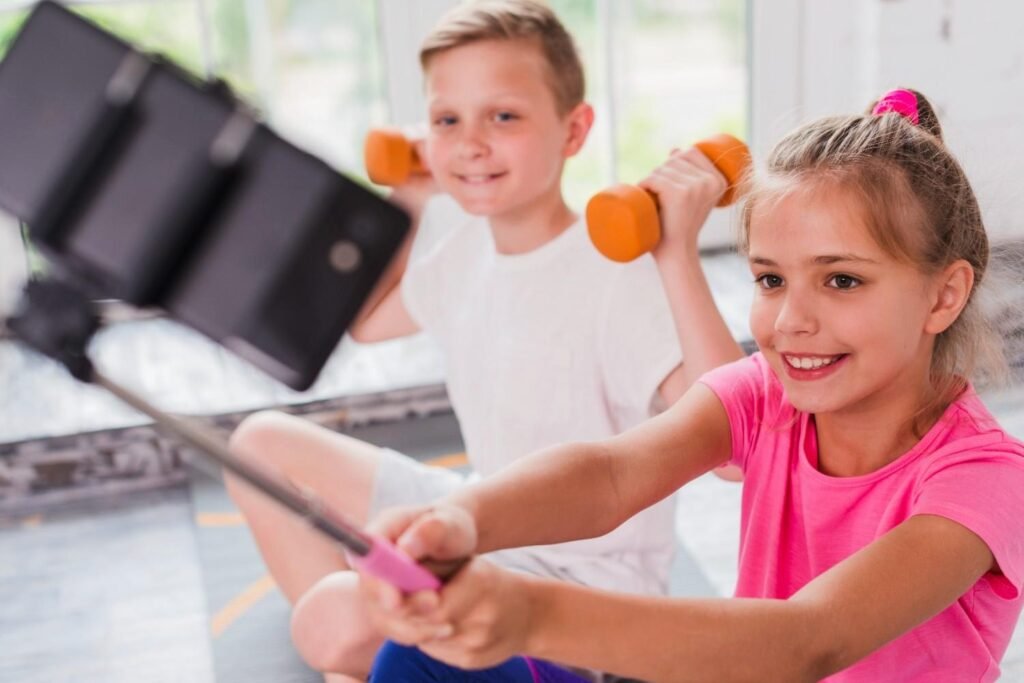
A kids gym offers structured physical movement, sensory play, and motor skill development to counteract sedentary screen time habits in growing children. Participating in active indoor play environments rebuilds core muscle stability, sharpens spatial awareness, and encourages healthy social behavior during critical early childhood growth stages. Prolonged screen exposure directly impacts physical development, sensory processing, and sleep quality in children aged 3 to 12. As sedentary digital habits increase, young bodies miss out on foundational movement patterns needed to build physical strength, bone density, and spatial awareness. Enrolling children in structured kids fitness programs bridges this gap by replacing static screen hours with dynamic physical play, obstacle navigation, and structured movement routines.
Replacing excessive screen time with active play requires a thoughtful environment built around safety and progressive skill learning. Structured youth exercise settings provide age-appropriate physical challenges that build confidence without causing undue stress on growing joints. Understanding how physical play transforms sensory processing, motor control, and social communication helps parents make informed choices about daily activity schedules. Below is a detailed breakdown of developmental benefits, activity options, safety standards, and practical schedules for active youth play.
The Developmental Cost of Excessive Screen Time
Extended screen viewing changes how children interact with their physical environment. Sedentary habits affect metabolic health, posture, and sensory development long before physical symptoms become obvious.
Physical and Neurological Impacts of Sedentary Behavior
Spending long hours staring at digital displays limits gross motor practice and slows down central nervous system processing. Children need constant physical input like running, climbing, balancing, and jumping to refine neural pathways that govern coordination and body control. Lacking these basic inputs often leads to poor core strength, weak postural control, and reduced cardiovascular endurance during normal school sports and play activities.
Sensory Processing and Spatial Awareness Deficits
Screens provide rapid visual and auditory input, but they offer zero tactile, vestibular, or proprioceptive feedback. When children miss out on three-dimensional movement, their inner ear balance mechanisms and spatial judgement suffer. Participating in active play environments helps recalibrate these sensory systems, allowing children to judge distances accurately, maintain physical equilibrium, and navigate real-world obstacles with ease.
Core Physical and Social Benefits of Active Play
Replacing passive viewing with structured physical movement helps children develop lifelong fitness habits, emotional balance, and physical confidence.
Building Motor Skills and Core Strength
Physical movement programs engage multiple muscle groups at once, forcing the body to adjust to changing angles and dynamic loads. Structured activities build foundational movement patterns that support everyday physical health:
Gross Motor Skills: Running, climbing, and hopping strengthen large muscle groups while improving stride rhythm and agility.
Fine Motor and Grip Strength: Hanging from monkey bars, grasping climbing holds, and handling light training tools build hand-eye coordination and finger dexterity.
Proprioceptive Control: Dynamic balance beams and foam pits teach children how to adjust muscle force and understand their body’s position in space.
Social Interaction and Group Dynamics
Unlike solitary tablet play, group fitness setups force children to communicate, cooperate, and navigate shared spaces. Attending a structured session with a certified personal trainer for kids introduces young participants to team games, turn-taking, and peer encouragement. These shared experiences teach emotional resilience, conflict resolution, and teamwork in a low-pressure, playful setting.
Versatile Active Environments for Every Household
Modern active play facilities adapt to different family schedules, spaces, and community needs:
The Kids Gym Facility: Dedicated indoor spaces equipped with soft landing mats, climbing walls, vaulting blocks, and padded obstacles built specifically for child safety.
Mobile Kids Gym Units: Specialized vans or trailers brought directly to schools, daycare centers, or neighborhood sites, offering structured obstacle courses on wheels.
Indoor Kids Gym Centers: Climate-controlled play parks that allow continuous, year-round physical activity regardless of outdoor weather conditions.
Safety Standards, Equipment Standards, and Activity Planning
Selecting age-appropriate equipment and managing room safety ensures children enjoy physical challenges without experiencing preventable injuries.
Choosing Safe Facilities and Equipment
Child-focused active facilities rely on customized gear designed to handle young body mechanics and energy levels. Critical facility features include:
Padded Flooring: High-density foam mats and seamless rubber flooring that absorb ground impact during jumps and tumbling drills.
Kid-Sized Equipment: Scaled-down parallel bars, low-height balance beams, and lightweight climbing structures made for smaller hand grips.
Cleanliness and Hygiene: Non-toxic, easy-to-clean vinyl surfaces disinfected regularly to maintain a healthy group play environment.
Engaging Kids Gym Games and Structured Drills
Instructors keep active sessions engaging by disguising core physical conditioning as fun, story-based games. Popular group activities include:
Obstacle Course Runs: Navigation setups combining crawling under soft hurdles, balancing along padded beams, and leaping onto soft mats.
Parachute and Ball Games: Group coordination games that build shoulder stability, timing, and collective communication. Complementing play with disciplined sessions like boxing Classes for Kids also builds focus and body control.
Tag and Reaction Drills: Fast-paced direction-change games that sharpen footwork, reaction speed, and cardiovascular stamina.
Practical Application: Weekly Active Play Transition Models
Transitioning children from screen-heavy routines to active daily schedules works best when done through gradual, structured steps.
Case Model A: Ages 3 to 6 (Sensory Exploration and Motor Basics)
A typical 45-minute active play session begins with a 10-minute imaginative warm-up using animal movements like frog hops, bear crawls, and crab walks. Incorporating structured activities such as circuit training exercises for kids during the next 25 minutes gives children a guided obstacle course where they practice balancing, stepping over soft hurdles, and landing safely on two feet. The session concludes with 10 minutes of quiet cool-down stretching and slow sensory ball rolling to ease the transition back to calm home activities.
Case Model B: Ages 7 to 11 (Skill Building and Group Fitness)
A structured 60-minute youth conditioning class kicks off with a 10-minute dynamic warm-up involving arm circles, high knees, and light shuttle runs. Mixing in energetic group elements similar to interactive kids birthday parties keeps children motivated throughout the core 35-minute block of functional bodyweight skills, including low-bar chin-ups, soft plyometric box jumps, and team agility games. The class finishes with a 15-minute group challenge such as a timed relay course followed by guided breathing and flexibility stretches.
Frequently Asked Questions
What is the ideal age for a child to start attending a kids gym?
Children can start attending parent-and-tot active classes as early as 12 to 18 months old, while independent structured group classes usually begin around age 3.
How does structured indoor play help reduce screen addiction in children?
Structured active play releases natural endorphins and dopamine, offering a healthy physical reward that reduces a child’s urge to seek quick digital stimulation from screens.
How many hours of active physical play do children need each day?
Health guidelines recommend that children aged 3 to 17 get at least 60 minutes of moderate-to-vigorous physical activity daily to support optimal physical growth and emotional health.
Are indoor active play facilities safe for toddlers and young children?
Yes, child-focused fitness centers use rounded edges, thick shock-absorbing foam, non-toxic materials, and trained adult supervision to keep play safe for young age groups.
Can active play help children with sensory processing or attention challenges?
Yes, dynamic physical play provides deep sensory input through balance, touch, and joint feedback, which helps improve focus, emotional regulation, and body control in many children.